


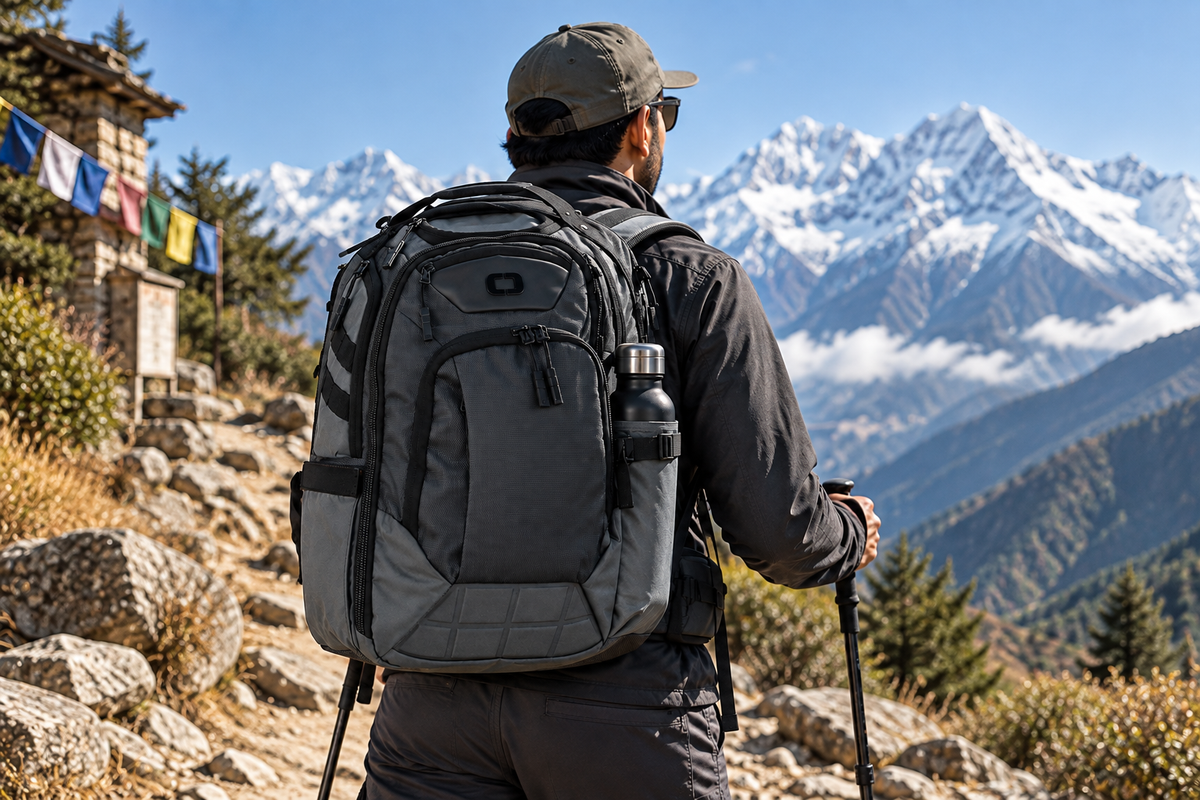
Trekking Bags India 2026: What You Need for Himalayan Trails and High Altitudes

A trekking bag is not an adventure travel bag. It is not a weekend bag with a carabiner attached to look outdoorsy. A genuine trekking bag in the Indian Himalayan context has to handle specific conditions that most bags — including bags marketed as outdoor or adventure — are not actually built for.
This guide covers the technical requirements of a Himalayan trekking bag and which OGIO backpacks meet them. Whether you're doing the Kedarnath base camp, the Roopkund snow trek, Hampta Pass, or the Rupin Pass circuit, the bag choice is a gear decision, not a style one.
What the Himalayan Trail Actually Does to a Bag

- Weather unpredictability: Himalayan weather changes in minutes. A clear morning can become heavy rain by noon and hail by 3pm. A water-repellent bag handles drizzle. A DWR-coated high-denier bag handles the sustained downpours that are normal between June and September on most Himalayan trails
- Load distribution over 6 to 10 hours: a day trek on Hampta Pass or Kedarnath can mean 6 to 10 hours of carry at moderate to high altitude. A back panel that works at hour 2 but fails at hour 6 — flattening under load, creating pressure points, trapping heat — is the difference between a trek you finish and one you struggle through
- Terrain-driven impact: scree, loose rock, river crossings, and trail conditions where you reach for a handhold all create bag contact with surfaces. A bag that tears at the first contact with a rocky trail edge is not a trekking bag
- Altitude and UV: above 3,500 metres, UV intensity significantly exceeds sea-level. Standard polyester becomes brittle faster at altitude. 1680D ballistic nylon maintains structural integrity across UV exposure levels that degrade lighter fabrics
What a Day Trekker Carries vs a Multi-Day Trekker
|
Item |
Day Trek (6-8 hrs) |
Multi-Day Trek (3-7 days) |
|
Volume needed |
20–25L |
35–50L (plus a support pack if porters used) |
|
Water |
2L (2 bottles or hydration bladder) |
3L + purification tablets or filter |
|
Clothing |
1 extra layer, rain shell |
3-5 days of technical layers, rain gear, thermal |
|
Food |
Day snacks + lunch |
Cooking equipment if camping; trail food for 3-5 days |
|
Tech |
Phone, action cam, power bank |
Above + GPS device, satellite communicator, laptop for remote workers |
|
Medical |
Basic first aid, blister kit |
Extended first aid, altitude medication, pulse oximeter |
The OGIO Picks for Indian Trekking
OGIO Renegade DNA — ₹16,990: The Day Trekker's Bag

For day treks and shorter Himalayan routes, the OGIO Renegade DNA is the most capable bag in OGIO's India range for the conditions the trails create.
-
27L capacity: the right volume for a full day trek — 2L of water, a camera, technical layers, food, medical kit, and documents without the bag being either underfilled or straining at the seams
-
1680D ballistic nylon: the highest-grade fabric in the consumer bag market. Resists tearing, abrasion, and puncture at a level that standard outdoor bags do not. When the bag hits a rock face on a narrow Himalayan trail, the 1680D surface takes the impact
-
RSS laptop compartment (floating sleeve): for trekkers who work remotely and carry a laptop, the RSS protects the laptop from the drops and impacts that are inevitable on technical terrain. A non-suspended sleeve does not
-
Dedicated hydration compartment with port: reservoir pocket with an external tube routing port; keeps hands free on technical terrain while maintaining continuous hydration access
-
27 pockets across Mission Control: first aid, snacks, camera, phone, map — all in fixed, accessible locations. In rain gear and gloves at 4,000 metres, knowing exactly where the medical kit is matters
-
Ergonomic back panel with airflow channels: maintains breathability during high-effort ascents; reduces heat build-up that causes excessive sweating and cooling issues at altitude
OGIO Alpha 20L — ₹9,990: The Light Day Hiker's Bag
 For lighter day hikes, nature walks, and less technical routes where the primary carry is water, a camera, and snacks, the OGIO Alpha 20L at ₹9,990 is the right entry point. It's lighter than the Renegade DNA, sized correctly at 20L for a day pack, and brings the same DWR water-resistant fabric construction.
-
20L capacity: right-sized for a 6-8 hour day hike without over-packing
-
Padded 15" laptop sleeve: for trekkers carrying a tablet or work laptop on the trail
-
Cargo net-inspired side pockets: expandable, accessible without removing the bag — water bottle and snacks within reach without stopping
-
DWR water-resistant fabric: handles the afternoon rain showers that are standard on most Himalayan trails between June and September
OGIO No Drag Mach 3 — For Motorcycle-Trekking Combos
For travellers doing the increasingly popular combination of motorcycle touring to a base camp followed by a day trek — common on the Spiti circuit, Ladakh routes, and Himachal roads — the No Drag Mach 3 handles both legs without switching bags. Aerodynamic for the ride, structured enough for the trail. Read more about moto-trekking packing in our Ladakh Road Trip Bag Guide.
Packing for a Himalayan Trek: Load Distribution Principles

OGIO Renegade DNA — packing diagram showing load zones
Visual showing: heavy items (water, camera, food) nearest back panel; medium items (clothing) in mid-zone; light/accessible items (snacks, first aid) in top and external pockets.
-
Heavy items nearest the back panel: water, camera body, food for the day. This keeps the centre of gravity closest to your body, which reduces back strain over long ascents
-
Medium items in the main compartment mid-zone: additional clothing layers, packable jacket
-
Light and frequently accessed items in top and external pockets: snacks, first aid, phone, sunscreen. Items you need on the trail without stopping to unpack
-
Rain shell accessible at the very top: Himalayan weather changes fast. A rain shell buried at the bottom of the bag when it starts raining at Roopkund base is not accessible when needed
-
Never pack water inside the main compartment: bottle leaks at altitude are real. Always in the external side pocket or hydration sleeve
Trail-Specific Bag Checklist
|
Trek |
Recommended Bag |
Volume |
Key Pack Items |
|
Kedarnath (14km ascent) |
Renegade DNA |
27L |
2L water, rain shell, snacks, first aid, phone |
|
Roopkund (7-day circuit) |
Renegade DNA + porter for camp gear |
27L day pack |
Camera, water, daily kit; porter carries camping load |
|
Hampta Pass (4-day) |
Renegade DNA |
27L |
Full day kit plus 1 night's essentials; camp gear with agency |
|
Triund (Dharamshala, easy day hike) |
Alpha 20L |
20L |
Light carry — water, camera, snacks, jacket |
|
Spiti Valley (moto + hike combo) |
No Drag Mach 3 |
Moto-sized |
Dual-use: aerodynamic on the bike, structured on the trail |
Related Reading
Shop OGIO Trekking Backpacks
Trail conditions referenced are typical for the routes named. Always check current BRO and NDMA advisories before departure. Prices as of August 2026.
Read more
What Your Bag Says About You at Work: The Professional's Guide to Office Carry in India
First impressions at the office start at the door. Before you've said a word in a meeting room, three things have already been assessed: your punctuality, your appearance, and — whether anyone ad...
Read more
Solo Female Travel India 2026: The Bag That Keeps You Safe, Organised, and Ready
Solo female travel in India has specific requirements that most bag guides don't address honestly. Safety is part of it — accessible pockets that keep valuables close, discreet storage that doesn...
Read more